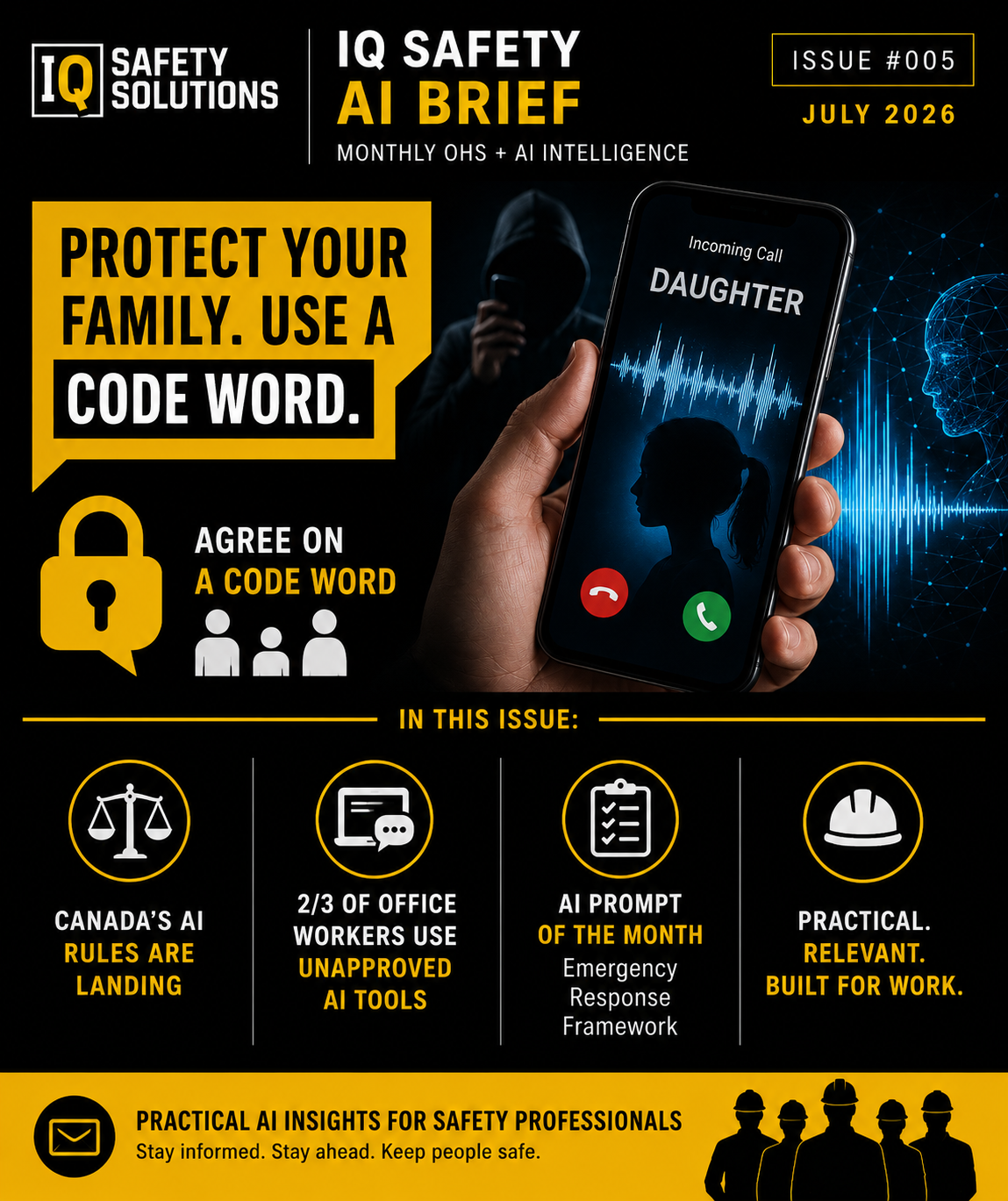
Would you send money if you heard your kid's voice begging for help? A San Diego family did.
The caller said their daughter had been arrested, then put her on the line. The voice was hers. It was an AI clone, and the scammers already knew personal details about her, right down to a medical condition she's had since childhood.
Three seconds of audio is enough to clone a voice now, and most of our families have hours of it sitting on social media and in voicemail greetings.
That story leads Issue #005 of the IQ Safety AI Brief, along with the one thing you can do this week that costs nothing: agree on a code word with your family.
Also in this issue: Canada's AI rules are landing and most employers still don't have a policy to meet them, two thirds of office workers admit to putting company information into AI tools nobody approved, and a prompt you can use to build the structure of an emergency response framework for your site, one scenario at a time.
Every month I go through the latest AI news and research and pull out what actually matters for workers and the people responsible for them. Whether you're in operations, management, or health and safety, the goal is to keep it practical and relevant.
If you have workers, you are one, or you're a health and safety professional who wants a monthly rundown on where AI is heading and how it connects to safety in the workplace, the sign-up link is in the first comment. You'll get this issue right away and every one after.
